War is often treated as an adventure or an exciting news story but the things people see in war often affect them for life. This is a glimpse into one man’s horror.
It took place in April 1942 when two RAF Squadrons headed for besieged Malta on the US aircraft carrier Wasp.
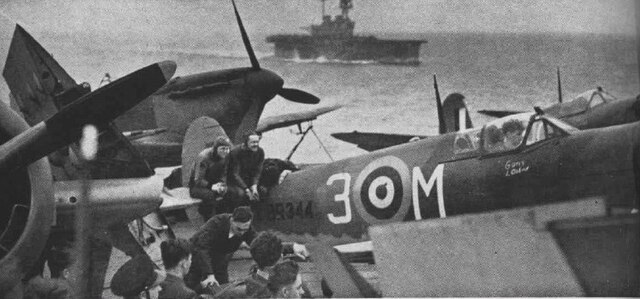
The plan was for the Spitfire pilots to take off from the deck 600 miles out and fly on to the island.
None of the pilots had ever been on an aircraft carrier before, let alone take off from one. And their aircraft were not designed for carrier operations.
The pilots also knew that, on a previous trip, miscalculations on the ship had meant that only four Hurricanes from a squadron of 12 had reached Malta – the rest having run out of fuel and been lost at sea.
The night before taking off, they received their instructions: the key to getting a Spit (loaded down with drop tanks) off the deck was “to open up to maximum power on the brakes, operate the boost override to give the extra thrust and press on down the deck”.
And to remember the point of no return was the moment your wheels began to roll down the flight deck.
The take-off operation was complicated, involving aircraft being brought up from the hangar deck to the flight deck in stages by lift.
It was as difficult for the ground crew as the pilots.
A key member of the squadron was an airman known as ‘the Confectioner’, because to him everything was ‘a piece of cake’.
He was to go first.
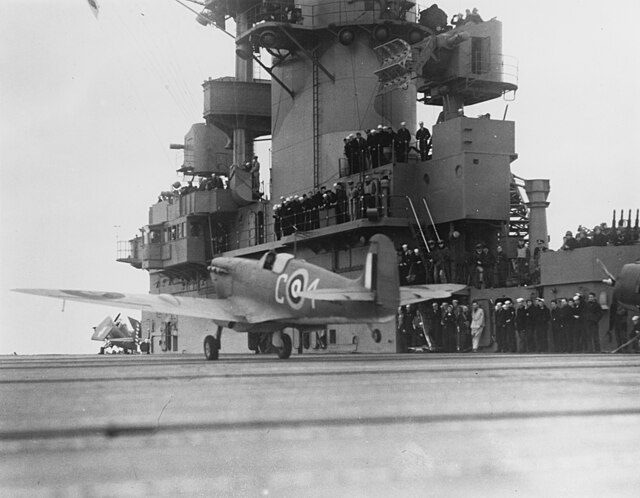
On maximum power, he failed to correct the swing normally expected from a Spitfire as it moved off, and disappeared over the side of the carrier halfway down the deck…
…and then he miraculously reappeared, having somehow gained sufficient speed to avoid ploughing into the waves of the Mediterranean.
But here’s the tragedy.
An RAF sergeant working on deck during the chaos of the take-off backed into a propeller and was killed instantly.
There was a West Indian pilot in the aircraft’s cockpit. Imagine how shaken he must have been by what he had seen.
But he was only allowed a moment before taking off – not to come to terms with the horror but to check his propeller for damage before taking off.
Fortunately, like the others eventually would, he made the take-off and headed for Malta.
But according to air ace Johnnie Johnson in his excellent history of air fighting, ‘Full Circle’, the young pilot “was never quite the same man again”.
Hidden inside the mass horror of the industrialised warfare we’ve become used to since the start of the 20th Century, from long-range artillery and mustard gas, through doodlebugs and atomic bombs, to guided missiles and drones, there are always personal stories of individual lives lost and ruined in a myriad of unthinkable ways.
 Greg Lewis
Leave a comment