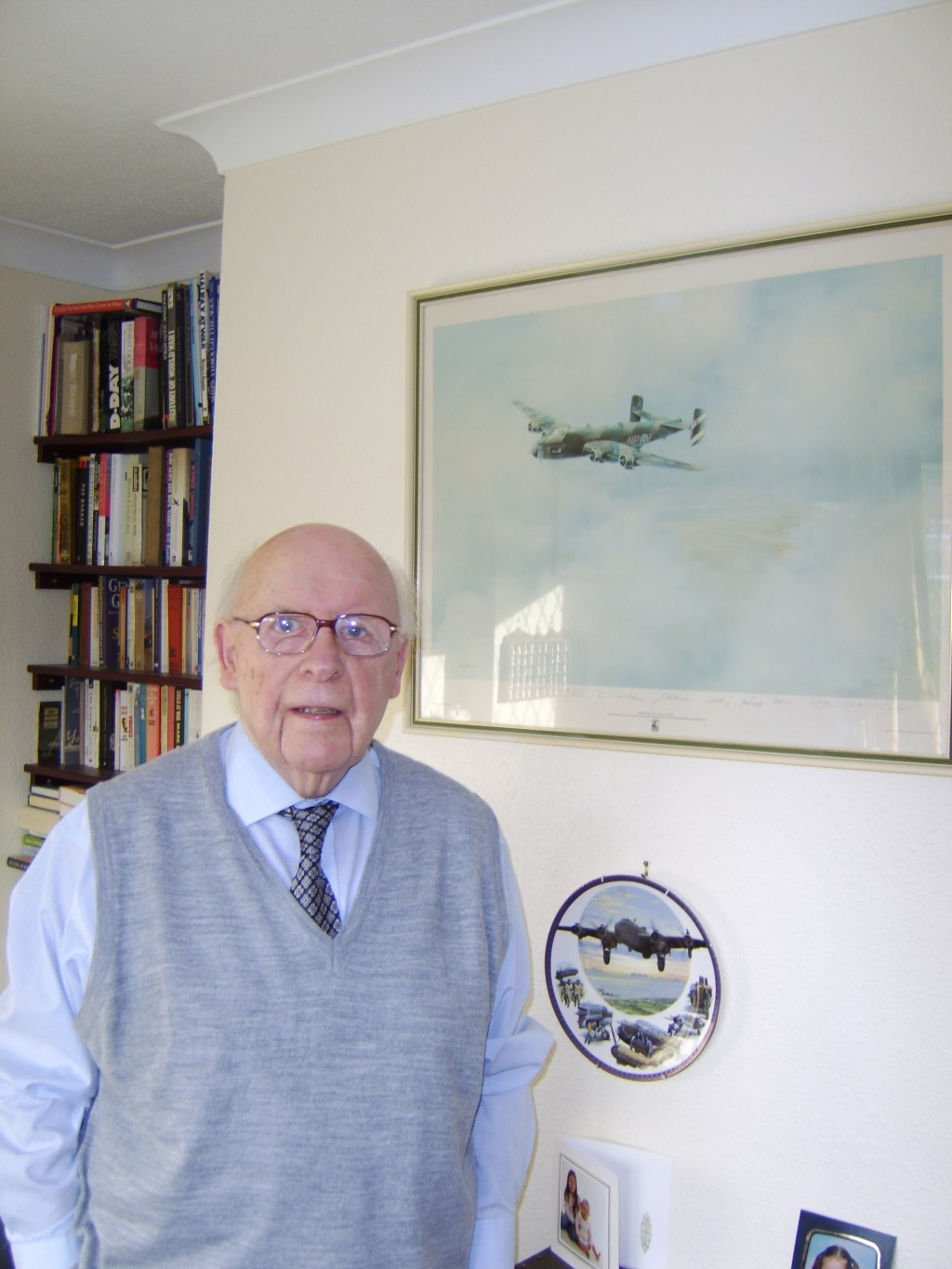
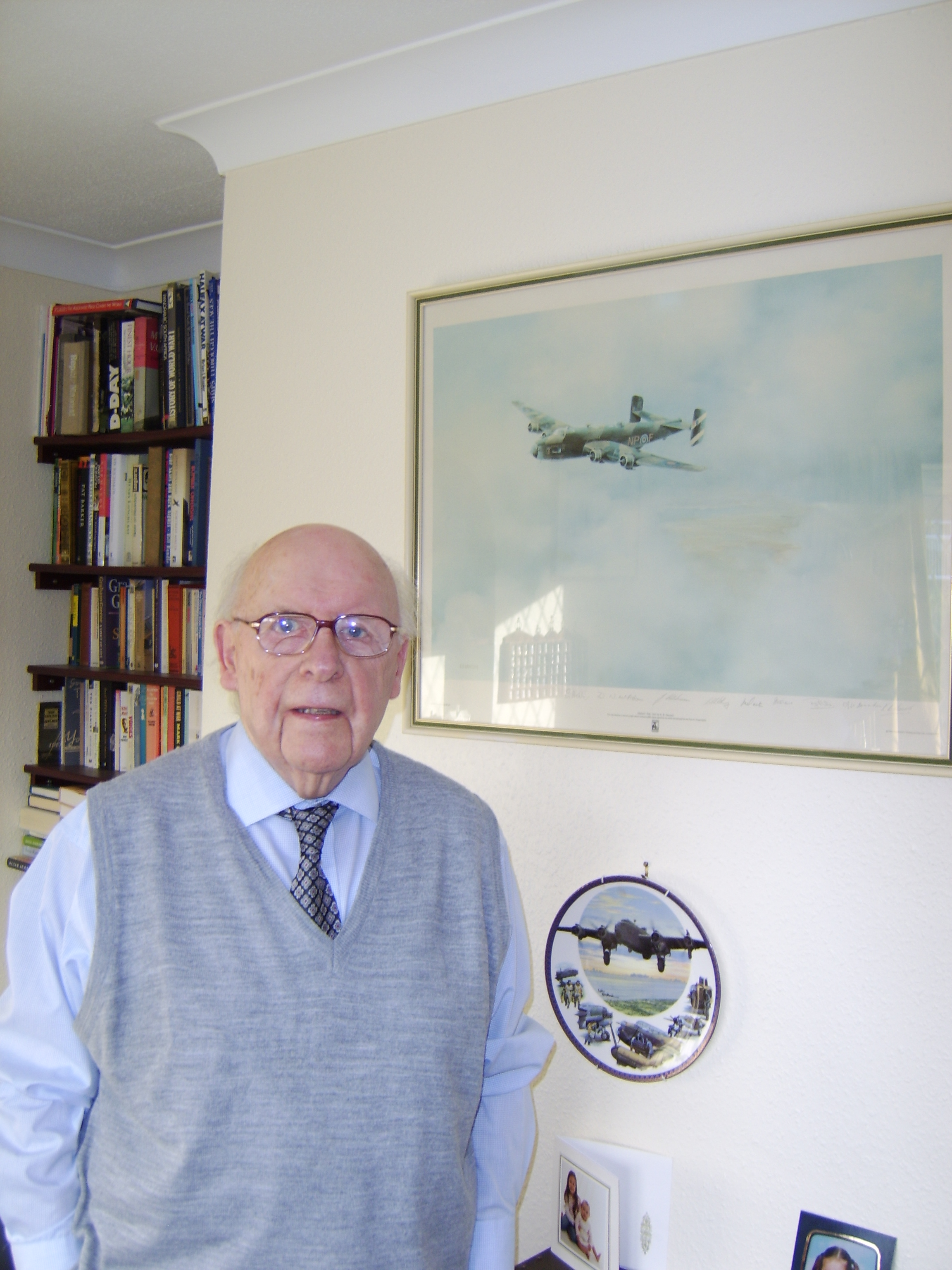
This is the man who first roused my interest in the story that would become my new book, ‘The Nazi Ghost Train’.
His name was John Evans, and he was a wonderfully kind and brave man with a remarkable story of his own.
A Halifax bomber pilot, he was shot down in May 1944 over Belgium.
Walking through the night in one boot – he had lost the other when his parachute opened – he managed to find a sympathetic farmer and was passed eventually to the Resistance.
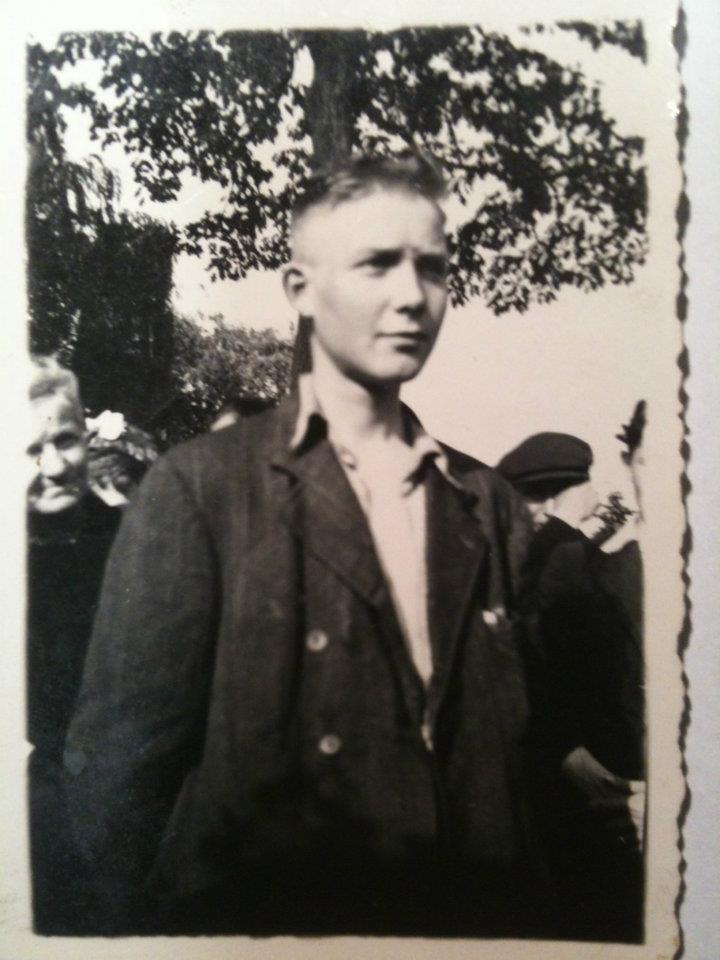
Among those who kept him free was René Jaspers (pictured above), whose son, Guy, has helped me immensely with the book. René spent nine months in German custody after helping many airmen in the area around Hasselt.
John remained in hiding until Belgium was liberated at the beginning of September.
When we were writing his story he told me about the ‘Ghost Train’, as I explain in this extract from the book:
I remember the moment I first became intrigued with the ‘Ghost Train’. I had travelled to a village just outside Nottingham, England, to see John Evans, an RAF pilot and evader whom I was proud to call my friend.
Sitting beneath a painting of his Halifax bomber in full flight, John was searching through his large box of memories – items which any museum would be delighted to own: his flying logbook, the letter from his CO to his parents to say he was missing, a grainy photograph taken in a walled back garden while he was on the run, and the false identity card created by the Resistance which claimed the Welsh pilot was actually a Belgian draughtsman named Albert Bastin. Then he found what he was looking for and he handed it to me.
It was a letter from Florent Biernaux, one of the people who had helped John escape capture after his bomber was shot down. Anyone who sat with an evader like John became intensely aware of the esteem and respect in which they held these civilians who had risked everything for them. They viewed them as the real heroes.
The letter was written six weeks after the end of the war in Europe. ‘I hope you will remember your stay in Hasselt at my home,’ Florent wrote. ‘I will tell you our adventure in a few words.’
After helping John and about sixty other airmen, Florent and his family had been arrested and sent to the ‘big prison’ of Saint-Gilles in Brussels. His wife, Olympe, teenage son, Raymond, and young daughter, Eliane, were all sent to concentration camps, but ‘I alone remain to Brussel, with 1,500 other men and women to be shot’.
But, he added, ‘On account of sabotage… we were liberated.’
Confused, I asked John what Florent meant. How could ‘sabotage’ save what Florent claimed was 1,500 lives?
‘Ah, that was le train fantôme,’ John said. ‘The ghost train…’
https://www.waterstones.com/book/the-nazi-ghost-train/greg-lewis/9781917439695

 Greg Lewis
Leave a comment