
My passion is for telling the story of ‘ordinary’ people doing extraordinary things.
I tend to leave writing about kings, queens, and generals to others.
Anyway, I hope that comes across in my interview with broadcaster Paul Ross.
Have a listen above – and, if you prefer, have a read below:
00:00:10 Paul Ross
Let me take you back, friends, to the dying months of World War II. And as the Nazis forced around 1400 men and women onto a train, their defiant passengers began fighting for their lives. With predictable brutality, the SS guards forced them on board to what the reluctant passengers, British airmen, Allied spies, resistance fighters, knew was a train ride to almost certain death.
They survived to the end of the war, but their vengeful Nazi captors were sending them on a final journey to a death camp.
What followed is nothing short of a military miracle.
It’s a story of heroism and humanity, of brutality, betrayal and courage.
And it’s brilliantly and thrillingly told by bestselling author Greg Lewis in his book, The Nazi Ghost Train: Evasion, Escape and Betrayal in Occupied Europe.
And Greg Lewis, author of The Nazi Ghost Train, joins us now.
Good morning, Greg.
Even your story at the start of the book about how you stumbled across this amazing story reads like a novel.
Can we start there, please, Greg?
00:01:05 Greg Lewis
Good morning, Paul. Yes, of course, yeah. I was very fortunate to become friends with a gentleman called John Evans, who was a Second World War bomber pilot. And I was working on his biography many years ago. And John had a letter in a box, this wonderful box of old mementos, that he had from a Belgian resistance person. And it was written in very, very sort of awkward English, just after the war, and John was very keen to find out what happened to the family because it helped him you know and in the letter it mentioned that he’d been saved, he said, ‘I was saved by the sabotage on the ghost train’ and that’s all he said he said ‘me and 1400 other people’ were saved on this train so I’m immediately I was extremely interested in this I’d never heard of the story at all.
00:01:56 Paul Ross
In fact, he called it the train phantom in French or Belgian, the ghost train, and yet the people involved in it from the start, you get the sense of the Belgian people themselves wanting to help as much as they can.
As this train is being taken out, they start singing around at the Belgian national anthem until the SS stop firing their guns in the air.
00:02:18 Greg Lewis
It’s an incredible scene. It’s an incredible scene to try and picture really. The Germans are emptying this prison full of 1400 people, patriots, airmen, SOE agents. And because they’d already emptied 200 people from the prison, the local people knew something was up. So they gathered at the prison and the prisoners were being taken in the trucks to the train station and, as you say, they were singing the Belgian national anthem.
They were throwing notes out of the back of the truck saying stop the train, you know, written on labels from tin cans they got from the prison, take a message to my wife, take a message to my children, but many of them were saying ‘stop the train’.
And this message then gets relayed to members of the Belgian resistance.
00:03:04 Paul Ross
And yet at the centre of the book, you might want to say the train central hero, is effectively an ordinary chap. He’d never really taken part in active resistance before. And then, after he’s been involved in this amazing story, I don’t want to give too much away, because you must read this book, The Nazi Ghost Train, by Greg Lewis. It’s an astonishing read. He kind of goes back into work the next day. Tell us a bit about him, please, if you would.
00:03:27 Greg Lewis
Yes, his name was Louis Verheggen. And as you say, once the train was being put together, you had certain members, local people, who were involved in the resistance. But many people have never done anything relating to resistance, didn’t know anybody in the resistance. And Louis Verheggen, a train driver, an ordinary working-class guy, had had no contact with the resistance.
But he could see that 1,400 people were being sent to their deaths.
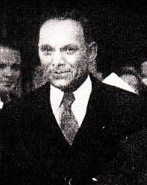
And even though at this stage, the British Army is at the gates of Brussels. So, if you don’t do anything, you’re safe, but he had to act. So, yes, he took part in this. He was very, very central. Perhaps he is the most central figure in saving all these lives. And when I met one of the people who’d been on the train years later, he said to me, ‘It’s astonishing. This man saved 1,400 lives, plus all the descendants that come from that. And there’s not a plaque, there’s not a statue to him.’
And in fact, at the moment, I’m talking to people, historians out in Brussels, to see if we can do something just to get this.
There are few statues to working-class heroes like that and, like you say, he did this and then the very next day he went back into work as if nothing had happened and just carried on with his job.
00:04:46 Paul Ross
Now as it’s probably well-known but you touch on it in the book, this follows that mass escape attempt which is fictionalized as The Great Escape after 50 British airmen were shot out of hand when they recaptured terrible war crime and Hitler knew his days were numbered. He wanted to go out with this kind of Ragnarok-like apocalypse at the end of his hideous regime.
And so a lot of these airmen were kind of in danger of being shot out of hand anyway, because they’d been in civilian clothing. The resistance had helped them. But then they’d been betrayed by the man who I found hypnotically fascinating, but demonic.
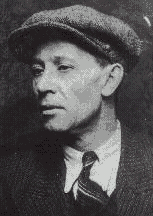
Every story needs a hero. You mentioned the hero of yours. And this man, Prosper Dezitter, I think you pronounce his name, is an absolute, I think you call him one of the darkest villains of the Second World War, mainly because he doesn’t seem to have been any kind of committed Nazi, but he was the arch betrayer of all these people, so many of these people.
00:05:42 Greg Lewis
Indeed, he’s a horrific figure. And I thought before, if you invented him in a novel, I don’t know if people would believe him. You know, he had a missing finger. He would wear different disguises. He would use different names.
Like you say, he wasn’t a Nazi. He was interested in money. Before the war, he was a criminal, a pretty despicable character. And as soon as the Germans invaded, he realized there was a chance here to make money.
So he was betraying soldiers after Dunkirk. Jewish people, airmen, resistors, and hundreds if not thousands of people were betrayed by him. So, like you say, absolutely despicable.
00:06:21 Paul Ross
And he’s working with a woman I think you described as his dark mistress, dark haired mistress, and also this mad Russian guy with a fast car who was meant to be whisking these airmen or people away to safety. He’d even get them to write, ‘can you write letters of thank you to the people who looked after you to kind of reassure them’ that he was on the straight and narrow?
00:06:41 Greg Lewis
Absolutely. So what he did was he created a fake evasion line, basically.
So genuine patriots would hand over airmen to him, thinking that he was going to get them to Switzerland or to Spain. But in actual fact, he would just turn them straight over to the Germans.
And as you say, he had his help of his mistress who was… a lot of the airmen found her very, very attractive, so that helped with the kind of enticing of these poor people who just didn’t know… They couldn’t speak a foreign language, so they were in an unusual situation. They were in a lot of danger, so they had to take help where they could.
And of course, Dezitter was just betraying them.
00:07:19 Paul Ross
And the airmen only realise this when they get together, and it’s the missing little finger on his, I think, on his right hand. He was so adept at disguising himself.
There’s one particularly hideous story about him in the book, around the middle of the book, when he meets this woman, or he works with him called Lalle, who seems to have developed an attachment for one of the airmen.
So she tells the airmen, ‘Don’t go with that fella. Leave another way.’
And she ends up murdered in the most brutal way.
00:07:49 Greg Lewis
Yes. He was completely ruthless. As you say, this is a woman who… You know, many people in these groups weren’t too sure. They thought they were being patriots, you know, but in actual fact, they were being cheated by him as well.
So yes, this woman, Annie Lalle, tried to sort of blow the whistle on what he was doing, and she was murdered, either by Dezitter himself or on his orders.
00:08:15 Paul Ross
Could you tell us, please, if you would, a bit about what you refer to in the book as what was known as the ‘Dog House’, the importance of that?
00:08:22 Greg Lewis
Yeah, the ‘Dog House’, Dezitter had a lot of different traps that he developed all the way through the war, but towards the sort of the last few months of the occupation of Belgium, he created this place called the ‘Dog House’.
It’s basically, it was a house, but the airman called it the ‘Dog House’because there was an Alsatian there and other dogs, so they’re referred to sort of jokingly as the ‘Dog House’, but it was there that he would take them right at the end, before they were handed over to the Germans.
So they would be brought from different towns and villages and cities in the countryside by genuine resistors to Brussels thinking they were getting help and then he would bring them to this place, the ‘Dog House’, which was his home.
He was living there with his mistress and these assorted other kind of renegades and criminals that he worked with.
They would be kept there for a couple of days, asked a few questions.
You know, if he could get some more information out of the airmen, they’d be worth more to him, you know, when the Germans took hold of them.
And then he would just deliver them straight to the Germans.
00:09:24 Paul Ross
Even the very end of the book, and I don’t want to give too much away about this brilliant read, it’s called The Nazi Ghost Train, Evasion, Betrayal, and Escaping Occupied Europe.
The story of how these airmen and women, spies, resistance workers, were effectively saved on this train is an amazing read.
And even the account at the end of the book of how they finally tracked down or attempt to track down this Dezitter character is a compelling read.
00:09:47 Greg Lewis
Indeed, because we have this sort of question really over what happened just after the end of the war, because he escaped, and when the airmen went back to the ‘Dog House’ to see if they could find him and his mistress, they were not there, they’d escaped.
So there were all these kinds of missions to try and find him in Germany.
Of course, Germany’s in chaos at the time, but they assume he’s gone to Germany.
He’s eventually found, but there is this sort of intriguing question as to whether he worked for the Americans for a short period of time, because he knew a lot of Belgian communists and he could have handed them over and the Americans had used Nazis in that period after the war to track down to track down what they thought were Soviet agents. But he did get his comeuppance in the end.
00:10:36 Paul Ross
You say in the book that he may have met Hitler at one point as well this character.
00:10:42 Greg Lewis
Well, there is that question of whether he did. Probably not, but he was certainly very well connected to German military intelligence, and I think they saw him as probably one of their one of their finest agents, really, possibly anywhere in occupied Europe, because he was just so successful in the number of patriots, airmen and soldiers, allied soldiers, he managed to turn over to them.
00:11:09 Paul Ross
And it really is their story. I’m focused a lot on this hideous character, but it really is the story of the bravery and courage, not just of those people who are in the armed forces, not just of those committed resistance fighters, but the ordinary men and women who made this remarkable story come to life.
And it’s a story effectively with a shadow of death hanging over everybody in it because the Gestapo, the SS would be coming out of desperation and increasingly brutal.
I mean, you talk again, not too gratuitously, but you talk about some of the tortures and terrible things that were done to people because of course the Nazis by then themselves felt they were quite literally fighting for their lives.
00:11:43 Greg Lewis
Absolutely. I mean, you know, the resistance people in particular are especially brave, I think. Men, women, teenagers who were really risking everything for strangers.
You know, the airmen, they could generally, certainly up until the last sort of few months of the war, they would hope to be treated as prisoners of war.
But, the resisters were, they really were looking at a concentration camp and probably certainly death, so incredibly brave.
I’m so glad that I can mention so many of their names and bring their stories back to life.
00:12:17 Paul Ross
It’s an amazing tale of courage and cunning and above all audacity, commitment and heroism and humanity as I was saying.
If you read one book this year, folks, make sure it’s this one.
It’s by Greg Lewis. It’s called The Nazi Ghost Train, published by Mirror Books, Evasion, Betrayal and Escape in Occupied Europe.
You’ve got Father’s Day coming up next month. My dad would love this, and I’m sure you might want to treat yourself to it.
And Greg Lewis is our special guest this morning.
It’s our Talk Sport Book of the Week.


Leave a Reply