Just came back from a third visit over 30 years to the Anne Frank House in Amsterdam.
It’s changed since I was last there, with a large modern museum now attached to the side.
The main emotional charge remains the ‘secret annexe’. The steep stairs. The film star photos on Anne’s wall. The pencil marks where father Otto marked off Margot and Anne’s growing height.
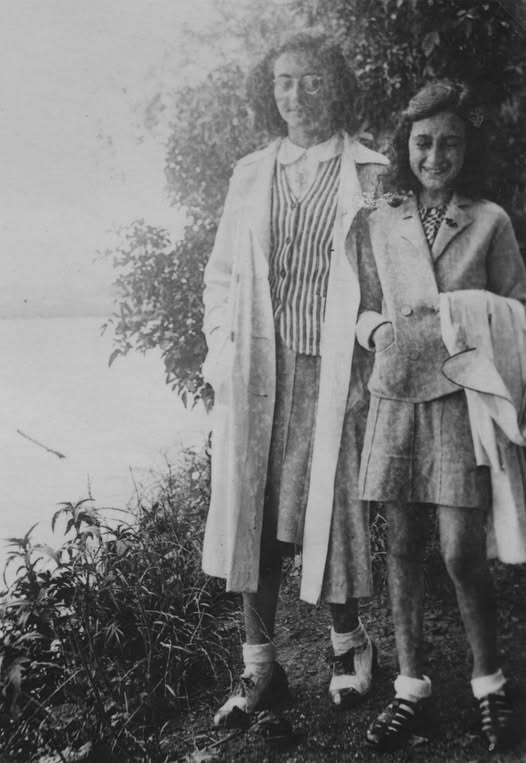
Margot. The other sister. She wrote a diary but, sadly, unlike Anne’s, it was never found. And so she became a supporting player in one of the most tragical stories of the Twentieth Century. Represented not in her own words, but in those of her younger sister.
Margot would have been 100 this year. She was born on February 16, 1926.
It was the call-up notice she received in July 1942, ordering her to report to a labour camp in Germany, that forced the family into hiding.
After the betrayal of the ‘secret annexe’, Anne, Margot, and their mother, Edith, were taken to the women’s camp of Auschwitz-Birkenau. In late October or early November 1944, Margot and Anne were moved to Bergen-Belsen where they died of typhus in late February or early March 1945.
Prompted by Margot’s centenary, the museum has shone a new light upon her: as you come out of the ‘secret annexe’ tour and return to the modern displays, there is a wall dedicated to Margot.
The other sister. Another victim. Among millions.
In this clip I talk about the visit – and the key thing not mentioned at the museum.


Leave a Reply